How an AI Web Design Workflow Helped Us Ship 3 Pages in Under Two Weeks

The Old Bottleneck
I work as a marketing web developer, and our creative team is small. That’s not a complaint, it’s just reality. When you have a limited number of people handling design, page requests pile up fast.
So a single landing page could sit in the queue for weeks. Sometimes a month would pass before it actually went live. Not because anyone was slow, but because design from scratch takes time, and there was only so much the team could push out at once.
We needed a way to move faster without adding headcount.
Where the AI Web Design Workflow Started
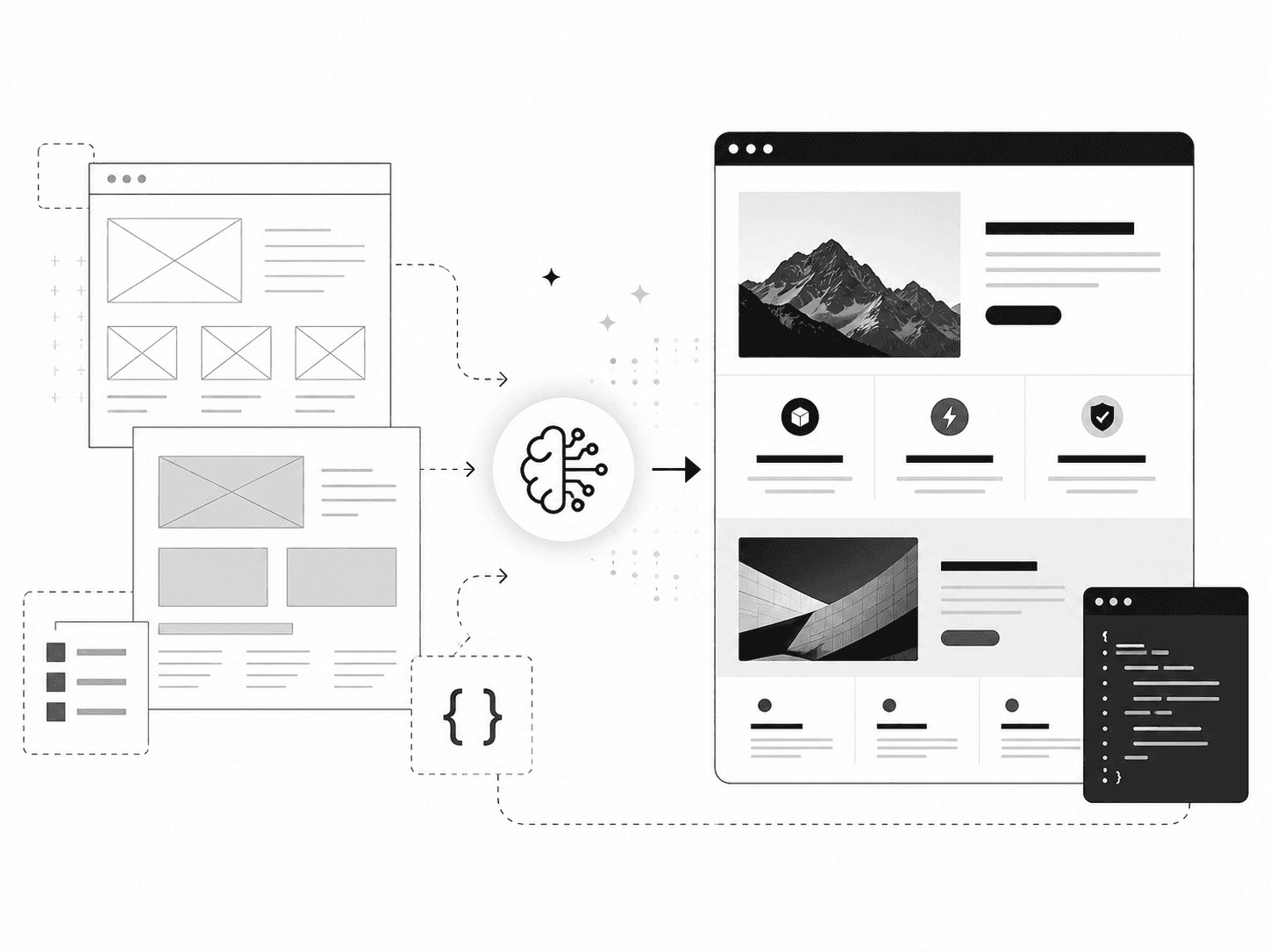
The idea came from the marketing team itself. What if we used Claude Design to handle the first pass of layout, then let the creative team iterate from there instead of starting from a blank canvas?
The key part was making it on-brand. I uploaded our company design system, the one our creative team already built, so Claude Design had real constraints to work with. Colors, type, spacing, components, all of it.
That changed everything. Instead of generic mockups, I got layouts that already looked like they belonged to us. The look and feel matched what we’d already defined, which means every new page stays consistent with the old ones. No drift, no one-off styling decisions.
I’d say half the design work was done before a human even touched it.
Then Claude Code Took Over
Design is only half the job. The other half is turning that design into a live page, and that’s usually where time leaks out.
This is where Claude Code sped things up. Translating the approved design into real code went much faster than my usual hand-build. The feedback loop got tighter too. I could make a change, see it, adjust, and keep moving without the long back and forth that normally slows a build down.
Put the two together and the math is simple. Claude Design gives the creative team a strong starting point to iterate on, and Claude Code shortens the development time on the other end. That’s how three pages went live in under two weeks instead of three of them eating up most of a quarter.
The Real Bottleneck Now: Visual Assets
Here’s the honest part. The workflow isn’t magic, and it didn’t remove every delay. It just moved the bottleneck somewhere new.
That somewhere is images and video. Claude can’t generate those, so I still have to wait on the creative team to deliver the actual visual assets before I can drop them into the page. Layout and code are no longer the slow part. Assets are.
I don’t think that’s a bad trade. It means the team spends its limited time on the work only they can do, the photography, the video, the brand visuals, instead of burning hours on layout that AI can rough out in minutes.
What I’d Tell Another Marketing Team
If you’re sitting on a backlog of pages and a small creative team, an AI web design workflow is worth trying. A few things that made it work for us:
Feed it your design system. On-brand output starts with giving the AI your real rules, not hoping it guesses right.
Use AI for the first pass, not the final word. The creative team still iterates and polishes. The AI just removes the blank-canvas problem.
Expect the bottleneck to move. Ours shifted to visual assets, and that’s fine. Knowing where the new slowdown is helps you plan around it.
The goal was never to replace anyone. It was to let a small team ship like a bigger one. Three pages in under two weeks tells me it’s working.
Is your team experimenting with AI in its design or development workflow? I’d love to hear what’s working and where you’re hitting walls. Reach out via the contact page.